
When to Resole Hiking Boots: 5 Signs You Should Not Ignore
A quality mountain boot, built with genuine craftsmanship, can accompany you for years and thousands of kilometres. But even the finest boot eventually reaches a crossroads: resole or replace? Knowing how to recognise the right signals allows you to act in time, save money and - above all - avoid finding yourself with a smooth sole on a wet trail.
Here are the 5 signs that tell you it is time to take your boots to a skilled cobbler
Sign 1: the tread is worn smooth or nearly gone
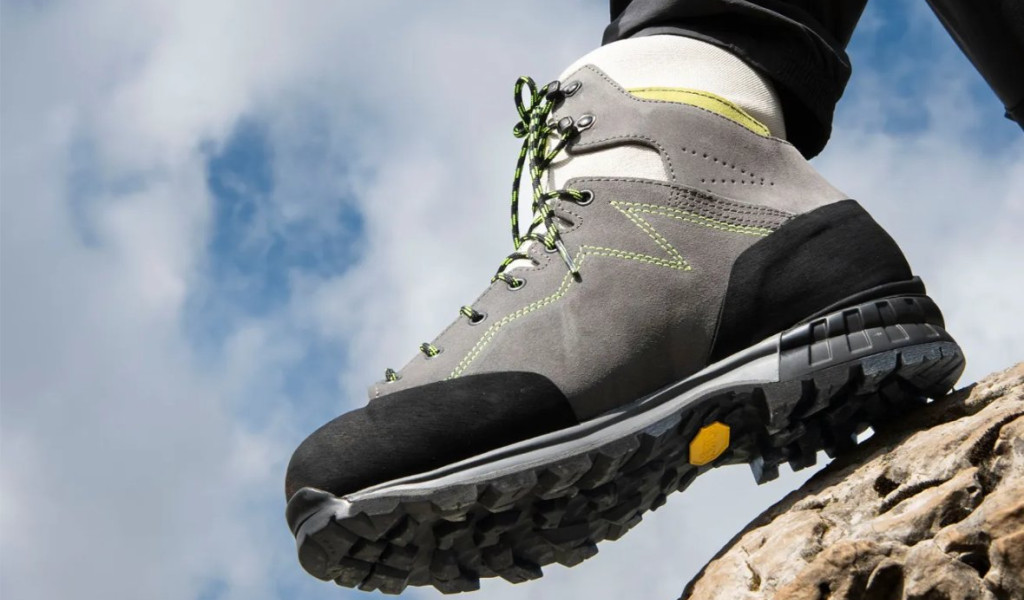
The tread is the pattern of lugs on the sole that provides grip on the terrain. With use, the lugs gradually wear down: first they lose their sharp profile, then they flatten until they almost disappear entirely.
How to check: pick up the boot and look at the sole from the side. If the lug profile is rounded or the sole appears flat in certain areas - especially across the forefoot and heel - it is time to act. Do not wait until you slip on a wet root to notice.
Critical zone: the heel wears fastest, especially on descents. Always check this area first.
Sign 2: you are losing traction on terrain that never used to cause problems
This is the signal you feel underfoot before you even see it. If you find yourself slipping on wet rock, compacted mud or damp grass where you used to walk confidently, the sole is almost certainly the culprit.
The sole compound, beyond the tread pattern, also degrades chemically over time: the rubber hardens, loses elasticity and with it the ability to grip. This process is accelerated by heat (direct sunlight, proximity to heat sources) and by long periods of inactivity.
Important: even a rarely used boot can have a degraded sole if it has been sitting unused for years. The age of the sole matters as much as the kilometres walked.
Sign 3: the sole is starting to separate from the upper
Sole delamination is one of the most visible and dangerous failures. It typically begins as a small lift at the edge - a slight separation around the forefoot or heel - that progressively widens with use.
Regularly check the perimeter where the sole meets the upper
Press with your thumb on the edge zones: if you feel give or a gap, the adhesive is failing
A characteristic squeaking sound while walking is often the first acoustic warning sign
Acting at this stage allows for a clean resole. Waiting until complete delamination can damage the upper structure and make recovery more complex or impossible.
Sign 4: the cushioning is not what it used to be
The sole is not just about grip: it is also protection and shock absorption. Over time, the midsole compound compresses and loses its ability to absorb impacts. The result is that the foot feels far more of every stone, root and irregularity in the terrain.
If after a day’s walking you have heel, arch or knee pain that you did not have before, it could be the sole that is no longer doing its job. A simple test: press your thumb into the sole - if it barely gives and feels as hard as plastic, the cushioning is spent.
Sign 5: the boot has clocked over 1,000-1,500 km
Technical sole manufacturers such as Vibram indicate an average service life of 1,000-1,500 km for their compounds, depending on terrain, the weight of the wearer and conditions of use. This is an indicative estimate, but a useful benchmark for those who track their outings.
Even without counting kilometres precisely, make it a habit to check your sole every season: an annual inspection before the spring or summer outings lets you act before it becomes a problem.

Resole or buy new boots?
This is the question many people ask. The answer depends on the condition of the upper:
Upper in good condition (intact leather, solid stitching, recoverable waterproofing): resole without hesitation
Upper with structural damage (deep tears, broken stitching, deteriorated lining): weigh up whether the cost of resoling plus repair is worthwhile against a new pair
Quality handcrafted boots: almost always worth resoling; the upper lasts far longer than the sole
Gronell’s view: a handcrafted boot built with quality materials can be resoled multiple times over its lifetime. It is a sustainable choice, economically sound and respectful of the craftsmanship that goes into every pair.

How to care for the sole to make it last longer
Clean your boots after every outing, removing mud and debris from the sole
Never dry boots next to direct heat sources (radiators, fires): the compound hardens
Store boots in a cool, dry place away from direct sunlight
Apply appropriate protective products for leather uppers at least once per season
Visually inspect the sole before every intensive season
FAQ
How many times can a mountain boot be resoled?
It depends on the construction. A boot with a full leather upper and handcrafted build can be resoled multiple times - even three or four - if the upper is in good condition. Boots with lighter synthetic uppers generally allow fewer resoling cycles.
Can I resole hiking boots myself?
DIY kits exist for minor repairs (partial separations, localised wear), but a full resole requires an experienced cobbler or specialist workshop. A poorly executed resole can compromise the fit and safety of the boot.
How much does it cost to resole mountain boots?
Cost varies depending on the model, the sole chosen and the workshop. On average, a full resole with a Vibram sole runs between 60 and 120 euros. Considering the cost of a quality pair of boots, the cost-benefit ratio is almost always in favour of resoling.


